Product Launch Strategy: A PM's Guide to Planning, Launching, and Scaling
A practical product launch strategy from real zero-to-one and scale-up work - covering planning, launch execution, onboarding, and post-launch growth.
In this article
-
Launch System: A product launch strategy is a living system, not a one-day event. Start building it months before launch day.
-
Strategy vs Plan: Strategy sets the direction, why and who. The plan handles execution, what, when, and by whom. You need both.
-
Audience Focus: Narrow your audience first. A focused launch to the right segment beats a broad launch to everyone.
-
Team Alignment: Internal alignment is just as important as external messaging. If your team cannot explain the product, customers will not get it either.
-
Three Phases: Structure every launch in three phases: pre-launch, launch, and post-launch. Skipping the third one is where most teams lose momentum.
-
KPIs First: Set your KPIs before launch, not after. Measure activation, adoption, and retention, not just signups.
-
Onboarding: Onboarding is launch-critical. Fast activation is the single biggest driver of long-term retention.
-
What Launch Really Is: The launch is not the finish line. It is the starting line for the next cycle of learning and growth.
Most product launches miss their targets. That point gets repeated so often it can start to feel abstract until you have lived through a launch that looked solid internally and still failed to land the way you expected.
I have spent the last five-plus years building products from scratch. One of them, Apploye, went from an empty codebase to a global B2B SaaS platform. Another, Fieldservicely, went from a whiteboard sketch to a shipped MVP. Through those builds, I learned something most launch guides skip over: the product itself usually is not the problem. The strategy around it is.
A product launch strategy is not a checklist you fill out the week before go-live. It starts the moment you commit to solving a real problem. And it does not end on launch day. That is actually where the most important work begins.
Here is what I have learned about getting launches right.
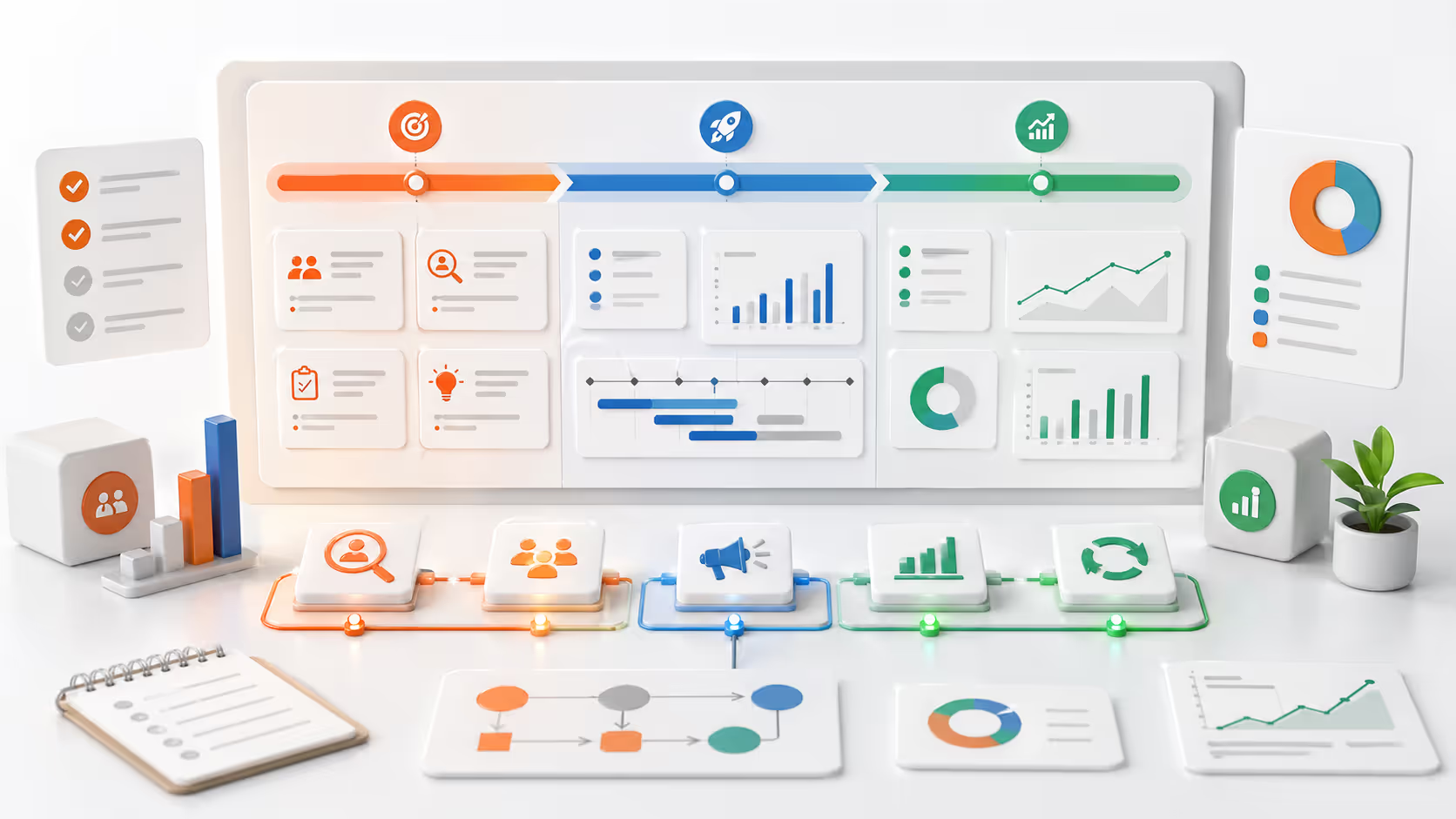
A strong product launch strategy connects validation, launch execution, and post-launch learning into one operating system.
What is a product launch strategy and how is it different from a launch plan?
These two terms get mixed up constantly. They are not the same thing.
A product launch strategy defines the bigger picture: your goals, target audience, positioning, messaging direction, and market approach. It answers why you are launching and who it is for.
A product launch plan is the execution layer. It turns the strategy into timelines, tasks, owners, campaigns, and deadlines. It answers what gets done, by whom, and when.
Think of it this way: strategy is the compass. The plan is the map. You need both, but the compass comes first.
Without a strategy, teams work in silos. Messaging gets inconsistent. Momentum dies a week after launch. I have seen it happen. I also caused it early in my career. The fix was always the same: step back, get aligned, then execute.
Why most product launches actually fail
Before getting into what works, it helps to understand what does not.
The four biggest launch killers I have seen, both in my own work and in other teams:
Targeting everyone at once. When you launch to everyone, your feedback is noisy, your messaging gets diluted, and you cannot tell what is working. When I scoped the MVP for Fieldservicely, we picked one segment, field service managers, and built the core workflow around their daily reality. That focus made everything clearer.
Before engineering begins, turn that boundary into a B2B SaaS MVP scope template with an explicit validation plan. A launch cannot produce useful feedback if the team never agreed on what it needed to learn.
Treating launch as a single event. A coordinated social push on one Tuesday is not a strategy. It is a tactic. Launches need a before, during, and after.
Skipping internal alignment. If your support team cannot explain the product on day one, you have a problem. If your sales team is improvising the pitch, you have a bigger one.
Ignoring what happens after launch. The first week of real user data teaches you more than months of planning. Teams that do not build a feedback loop into the launch lose momentum fast.
The three phases every strong launch follows
The best launches I have been part of, and the best ones I have studied, all follow the same three-phase structure. Not because it is trendy. Because it works.
Phase 1: Pre-launch
This is where you validate demand, sharpen your positioning, prepare your team, and build the assets you will need.
At Apploye, pre-launch was not a marketing exercise. It was months of requirement analysis, user interviews, and iteration on core workflows. We did not pick a launch date and work backward. We built until the product solved a real problem, then we launched.
During pre-launch, you should:
- Confirm your target audience, not “small businesses” but the specific segment that feels the pain most.
- Run customer research to uncover pain points, competitor gaps, and adoption barriers.
- Lock in your positioning and messaging so every touchpoint tells the same story.
- Prepare launch assets such as your landing page, emails, demo video, FAQs, sales deck, and onboarding content.
- Train internal teams before a single customer sees the product.
When I was setting up GoHighLevel CRM pipelines for Fieldtask, the pre-launch phase was all about getting lead capture and onboarding flows dialed in. Not glamorous work, but it meant we were not scrambling when users actually showed up.
Phase 2: Launch
Launch day is your coordinated push. Email, social, your website, communities, product directories, all hitting at the same time with the same message.
What matters here is not being everywhere. It is matching the channel to where your audience actually pays attention and staying consistent. If your landing page says one thing and your sales deck says another, trust drops immediately.
Do not forget in-app messaging for existing users. When we launched feature updates at Apploye, our current users were our best amplifiers. They already trusted the product. They just needed to know what changed and why it mattered to them.
One thing I always build into launch day: real-time monitoring. Track mentions, support tickets, signup patterns, and early feedback. You want to catch problems in hours, not weeks.
Phase 3: Post-launch
This is the phase most teams skip, and it is the one that matters most.
After launch, you switch into listening mode. Are people activating? Where do they drop off? What questions keep coming up in support? What messaging actually converted?
At Apploye, improving onboarding and key user flows after launch was one of the highest-impact things we did. It increased adoption and cut support load at the same time. That post-launch work generated more value than the launch day itself.
Smart post-launch moves include collecting user feedback through surveys and support analysis, iterating on messaging based on what resonated, doubling down on top-performing channels, building case studies from early wins, and fixing friction points in onboarding before they become churn drivers.
A practical framework: 10 steps to build your launch strategy
Here is the step-by-step I use. It is not theoretical. It is pulled from launching real products.
1. Start with customer and market research
Before you write a single line of copy, understand who you are building for and what gap you are filling. Research should uncover customer pain points, unmet needs, competitor weaknesses, pricing sensitivity, and adoption barriers.
The goal is not just to confirm demand. It is to find the angle that makes your product matter to a specific group of people. Strong launches are built on audience understanding, not internal assumptions.
2. Define positioning and messaging
Your positioning should explain who the product is for, what it helps them do, how it is different, and why it is worth choosing right now.
Then build messaging that supports that positioning everywhere: landing pages, emails, ads, demos, onboarding, and support docs. If the message shifts too much between channels, you lose people.
3. Narrow your initial audience
One of the biggest launch mistakes is trying to reach everyone at once. Start with the segment most likely to get immediate value. That might be a beta group, power users, or a tightly defined community.
A focused launch beats a broad but weak one. Some of the strongest SaaS products grow through controlled access before doing any big public push.
4. Align every team before going public
At Apploye, I owned sprint planning and cross-functional delivery. The single biggest unlock was not a tool or a framework. It was making sure engineering, design, marketing, sales, and customer success all knew three things: what we were launching, why it mattered, and what their specific job was during the launch window.
Run a kickoff. Write a one-page launch brief. Do internal demos. These small steps prevent the chaos that sinks launches.
One tactic that works well: run a pre-mortem. Before launch, ask your team, “Imagine this launch flopped. What went wrong?” You will surface risks you would not catch otherwise. The Atlassian guide to pre-mortems is a useful reference if your team has never done one.
5. Build a realistic timeline
A good timeline maps dependencies, content production, approvals, training, campaign scheduling, and post-launch check-ins. It should include buffer time for delays.
A rushed timeline creates weak execution. A well-built timeline creates confidence. For many products, three to six months of lead time is a healthy range.
6. Prepare your launch assets
Typical assets include a product landing page, announcement email, blog post, demo video, sales deck, FAQs, help docs, social posts, onboarding content, and internal enablement materials.
Lead with customer outcomes in every asset. People care about what changes for them, not a long feature list.
7. Train internal teams first
Your launch should happen internally before it happens externally. If your own team cannot explain the product clearly, the market will not understand it either.
When I led desktop experience upgrades at Apploye, we turned complex needs into clear specs first for our own team. That clarity carried straight through to the user experience.
8. Launch across the right channels
Go where your target users already pay attention. That might be email, content marketing, social, communities, paid ads, PR, webinars, or partner channels.
What matters is not being everywhere. It is matching the channel to your audience and the stage of your launch. For example, Product Hunt launch planning can make sense for some SaaS products, but it is not automatically the right channel for every product or audience.
9. Measure with clear KPIs
Set your success metrics before launch. Here is a framework that covers the full picture:
| Measurement area | What to watch | Example KPIs |
|---|---|---|
| Acquisition | Are the right people showing up? | Qualified signups, demo requests, landing-page conversion rate, CAC |
| Activation | Are new users reaching value quickly? | Activation rate, onboarding completion, time-to-value, setup completion |
| Adoption | Are users building a habit? | Core feature usage, DAU/WAU, repeat sessions, team invites |
| Revenue | Is launch attention turning into business? | Trial-to-paid rate, paid conversion rate, MRR, pipeline created |
| Satisfaction | Are users succeeding without friction? | NPS, CSAT, support ticket volume, churn risk signals |
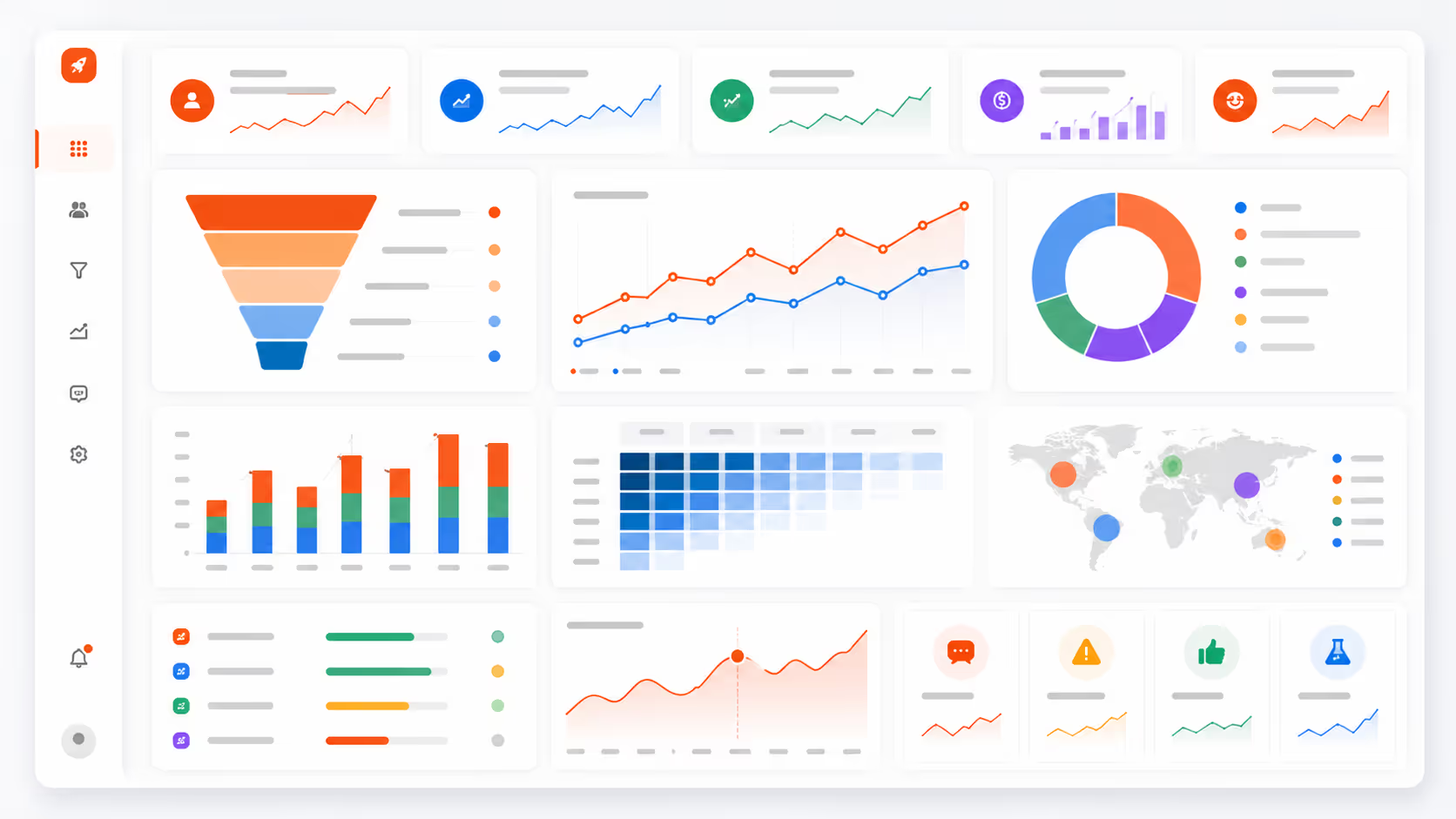
Launch KPIs should show whether attention is turning into activation, adoption, revenue, and satisfied users.
You do not need to track everything. Track what shows whether the launch is working.
10. Keep optimizing
Kill what is not working. Double down on what is. Refresh your messaging based on real user language. Build feedback loops into your process through surveys, session recordings, heatmaps, and support ticket analysis.
When I was shaping the product experience for Optinify, early post-launch data told us things no amount of pre-launch research could. Real users behave differently than you expect. That is not a failure. It is fuel.
What separates a successful launch from a failed one
| Area | Strong launch behavior | Weak launch behavior |
|---|---|---|
| Team alignment | Clear owner, clear timing, clear escalation path | Cross-functional confusion and reactive handoffs |
| Positioning | One sharp message tied to one real user problem | Broad messaging that tries to please everyone |
| Validation | Beta feedback shapes product, onboarding, and rollout | Launch happens before real feedback changes anything |
| Decision-making | Post-launch reviews rely on live KPI trends | Teams react to anecdotes and internal opinions |
| User experience | Onboarding gets users to value fast | Users sign up, stall early, and disappear |
Onboarding is part of your launch, not an afterthought
You can drive a thousand signups on launch day. But if people cannot figure out your product in the first five minutes, they are gone.
Early at Apploye, we invested heavily in the desktop experience, turning complex needs into clear specs and usable flows. The result was simple: users stuck around. They did not need a support call to get started.
Your onboarding does not need to be fancy. A welcome guide, a few tooltips, maybe a short video. The goal is to get users to their first aha moment as fast as possible. Every extra click between signup and value is a place where people quit.
Fast activation is one of the strongest drivers of long-term retention. Treat onboarding as launch-critical, because it is.
Frequently asked questions
Short answers to the launch questions teams usually ask once they move from planning into execution.
How far in advance should I start planning a product launch?
For most products, three to six months is enough time to do the work properly. That gives you room for research, positioning, internal alignment, asset creation, and a pre-launch feedback loop without turning the launch into a dragged-out internal project.
What is the biggest reason product launches fail?
Most launches fail because the team goes public before the story, audience, and internal execution are aligned. Weak positioning, fuzzy ownership, and no post-launch learning loop create more damage than product imperfections do.
Do I need a big budget to launch a product well?
No. A focused launch with clear messaging, strong onboarding, and the right channel mix usually beats a larger campaign with weak positioning. Budget helps distribution, but it does not fix confusion.
How do I know if my product is ready to launch?
Your product is ready when one specific audience can complete the core workflow, understand the value quickly, and get support if something breaks. You do not need perfection. You need a stable, useful product and a team ready to respond.
Should I do a soft launch or a full public launch?
Use a soft launch when you are still validating onboarding, messaging, or product stability. Go fully public when the value proposition is clear, the product holds up under real usage, and your team can handle the attention without scrambling.
What should I prioritize after launch week?
Prioritize activation, onboarding friction, and message-market fit. The first post-launch window should tell you where users are getting stuck, what they understood immediately, and which channels brought in the best-fit users.
Your launch is only as good as what comes after it
A flashy launch day feels great. But the products that last are the ones backed by teams who keep showing up after the initial buzz fades.
Keep talking to users. Keep improving the experience. Keep measuring what matters. The launch is not the finish line. It is the starting line.
If you are working on a product launch right now and want to talk through strategy, positioning, or onboarding, use the contact button in the site header.